

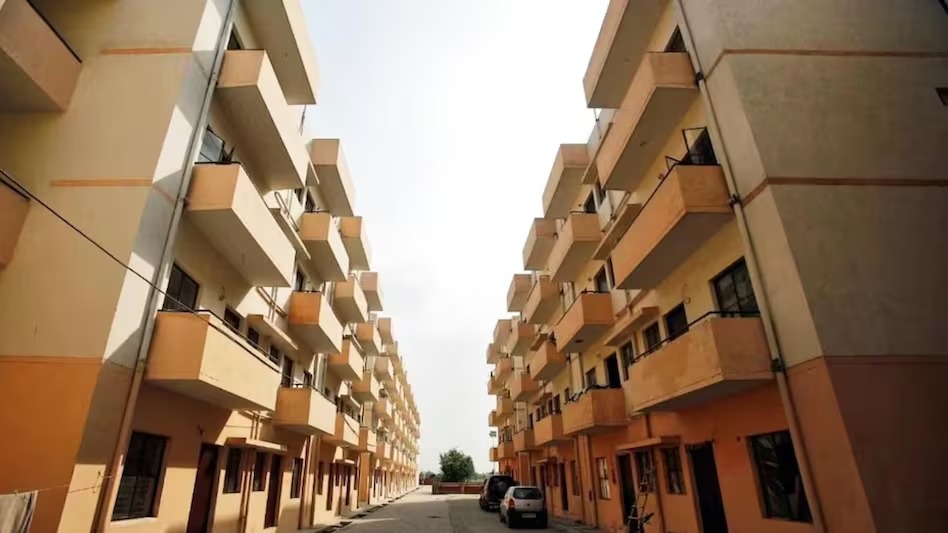
The expansion of India’s affordable housing program under the Pradhan Mantri Awas Yojana – Urban (PMAY-U) 2.0 marks a significant shift in addressing urban housing shortages. Backed by an investment of ₹10 lakh crore, the flagship program aims to assist 1 crore urban poor and middle-class families in constructing, purchasing, or renting all-weather pucca houses between 2024 and 2029.
With the Ministry of Housing and Urban Affairs (MoHUA) releasing updated statistics on approvals and municipal integrations, understanding the specific mechanics of the beneficiary registration, geographic expansions, and spatial limits is crucial for prospective homebuyers.
What is the PMAY 2.0 Pucca House Beneficiary List and how do you check it?
The PMAY 2.0 pucca house beneficiary list is an official directory containing the names of families cleared by the central and state governments to receive direct financial assistance or interest subsidies. Inclusion in this list confirms that an applicant’s socio-economic status, land title (where applicable), and lack of existing property have been verified against municipal databases.
Checking one’s status in the registry has been consolidated into a streamlined digital verification system to prevent delays and middleman interference. To navigate this eligibility check and registration pathway seamlessly, first-time buyers should understand how to apply for PMAY 2.0 online through authorized portals.
Step-by-Step Verification Process
- Access the Tracking Portal Directly: Click here to open the PMAY Track Application Status Portal to search for your registration profile directly.
- Retrieve Application Status: Retrieve status records by entering either the unique Application ID or the registered 12-digit Aadhaar number of the primary applicant.
- Complete OTP Authentication: Enter the secure one-time password (OTP) sent to the mobile number linked with the Aadhaar card.
- Review Approval Stage: The portal will display the application’s current phase—whether it is under verification by the Urban Local Body (ULB), awaiting state validation, or listed on the final sanctioned beneficiary roll.
Which Urban Areas, Tier 2, and Tier 3 Cities Are Covered Under PMAY-U 2.0?
PMAY-U 2.0 covers all statutory towns, Urban Local Bodies (ULBs), Urban Development Authorities (UDAs), and newly constituted statutory towns identified post-Census 2011 across the country. The updated scheme heavily prioritizes Tier 2 and Tier 3 cities, where rapid urbanization has triggered an acute demand for planned affordable housing infrastructure.
By aligning housing construction with municipal infrastructure, the scheme actively aims to prevent the unplanned growth of slums in smaller cities.
When evaluating property and financing in these expanding Tier 2 and Tier 3 hubs, buyers utilize a mix of public and private lending options. While national giants like the State Bank of India (SBI) and HDFC dominate the structured corporate salaried segment, housing finance companies like PNB Housing Finance, Bajaj Housing Finance, and HomeFirst provide essential regional access. HomeFirst specifically targets underserved self-employed applicants and informal earners in smaller urban geographies, addressing the typical documentation bottlenecks that arise when assessing non-traditional income.
Who Counts as a Beneficiary Family Unit Under PMAY 2.0 Eligibility?
A beneficiary family under PMAY-U 2.0 is defined strictly as a household unit comprising a husband, wife, and their unmarried children. No member of this defined family unit must own a pucca house in their name, or in the name of any other family member, anywhere in India to be eligible for the scheme.
To ensure equitable distribution and social safety, the program enforces structural rules on household ownership and income brackets:
- Mandatory Female Ownership: The physical house constructed or purchased under PMAY-U 2.0 must be registered in the name of the female head of the household or held in joint ownership between the husband and wife. Exceptions are granted only if the household has no surviving adult female member.
- Income Bracket Segmentation: Eligibility is mapped across three distinct annual household income brackets:
- Economically Weaker Section (EWS): Households with an annual income up to ₹3,00,000.
- Low-Income Group (LIG): Households with an annual income between ₹3,00,001 and ₹6,00,000.
- Middle-Income Group (MIG): Households with an annual income between ₹6,00,001 and ₹9,00,000.
- Social Equity Preferences: Priority is legally given to widows, single working women, senior citizens, persons with disabilities (PwD), Scheduled Castes (SC), Scheduled Tribes (ST), minorities, and specialized occupational groups such as street vendors (under PM SVANidhi) and traditional artisans (under PM Vishwakarma).
What Are the Carpet Area Limits Allowed Under Different PMAY 2.0 Verticals?
The maximum carpet area permitted under the Interest Subsidy Scheme (ISS) of PMAY-U 2.0 is capped at 120 square meters for all income categories (EWS, LIG, and MIG). For other program verticals, such as Beneficiary-Led Construction (BLC) and Affordable Housing in Partnership (AHP), the layout must feature a minimum of 30 square meters and a maximum of 45 square meters of carpet area.
This spatial restriction ensures that central funding is directed strictly toward affordable, functional family units. The specific divisions of space, income limits, and subsidies are detailed below:
Key ISS Financial Rules
To claim the maximum interest subsidy of ₹1.80 lakh under the ISS, the home loan must satisfy three primary financial parameters:
- Maximum Loan Eligibility: Only loans up to ₹25 lakh are eligible for the subsidy — the 4% rate applies to the first ₹8 lakh of the principal. If the total loan amount exceeds ₹25 lakh, the entire loan becomes ineligible for the subsidy; there is no partial or pro-rated benefit above this threshold.
- Maximum Property Value: The overall market value of the residential property must not exceed ₹35 lakh. Exceeding this cap similarly disqualifies the loan from the subsidy in full, regardless of the loan amount.
- Disbursement Mechanism: The subsidy is calculated over a maximum tenure of 12 years and is credited in five equal annual installments of ₹36,000 directly to the borrower’s loan account, provided the loan account is active and the outstanding principal remains above 50%.
Which States and Union Territories Lead in PMAY-U 2.0 Approvals?
According to the latest data released by the Central Sanctioning and Monitoring Committee (CSMC), cumulative sanctions under PMAY-U 2.0 have crossed 16.13 lakh houses. This reflects a coordinated effort to align state housing policies with central targets, with project approvals actively accelerating across multiple participating states.
Rather than focusing on unverified state-by-state rankings, the rapid pace of approvals highlights a unified administrative drive to secure affordable housing for urban populations.
Key Performance Indicators from the Latest CSMC Data
- Total Scheme Sanctions: The overall approved housing count under PMAY-U 2.0 stands at over 16.13 lakh units (including 12.99 lakh BLC units, 1.81 lakh AHP units, 1.20 lakh ISS units, and 12,846 ARH units). This builds upon the original PMAY-U framework (launched in 2015), which has sanctioned over 125 lakh (1.25 crore) houses since its inception.
- Geographic Distribution of New Approvals: The latest approval rounds cleared 2.13 lakh homes across 16 states and UTs. Key participating states include Andhra Pradesh, Assam, Bihar, Chhattisgarh, Gujarat, Haryana, Maharashtra, Madhya Pradesh, Mizoram, Meghalaya, Nagaland, Odisha, Rajasthan, Telangana, Tripura, and Uttar Pradesh.
- Social Inclusion and Gender Metrics: PMAY-U 2.0 continues to enforce highly successful gender-equity mandates, with approximately 97% of overall approved houses registered in the name of a female head of household or held in joint ownership.
Next Steps for Aspiring Homebuyers
Securing an affordable home under the PMAY-U 2.0 program requires matching state beneficiary approvals with structured housing finance. While municipal bodies process the physical lists, individual buyers must coordinate with a primary lending institution to enroll in the Interest Subsidy Scheme (ISS).
Comparing leading mortgage providers is a vital part of this transition. While major commercial banks focus on candidates with highly documented, formal corporate salary histories, specialized lenders like PNB Housing, Bajaj Housing Finance, and HomeFirst offer the localized processing needed for self-employed individuals and the informal labor force in India’s booming Tier 2 and Tier 3 cities.
Disclaimer: The figures, sanction data, and scheme details in this article are compiled from official government sources (MoHUA, PIB) as well as state government statements and news reports current as of publication. PMAY-U 2.0 sanction numbers, state-wise approvals, and related statistics are updated periodically by the relevant authorities and may have changed since this article was written. Readers are advised to verify current eligibility criteria, subsidy amounts, and application status directly on the official PMAY-U portal (pmay-urban.gov.in / pmaymis.gov.in) or with their lending institution before making financial decisions.
